
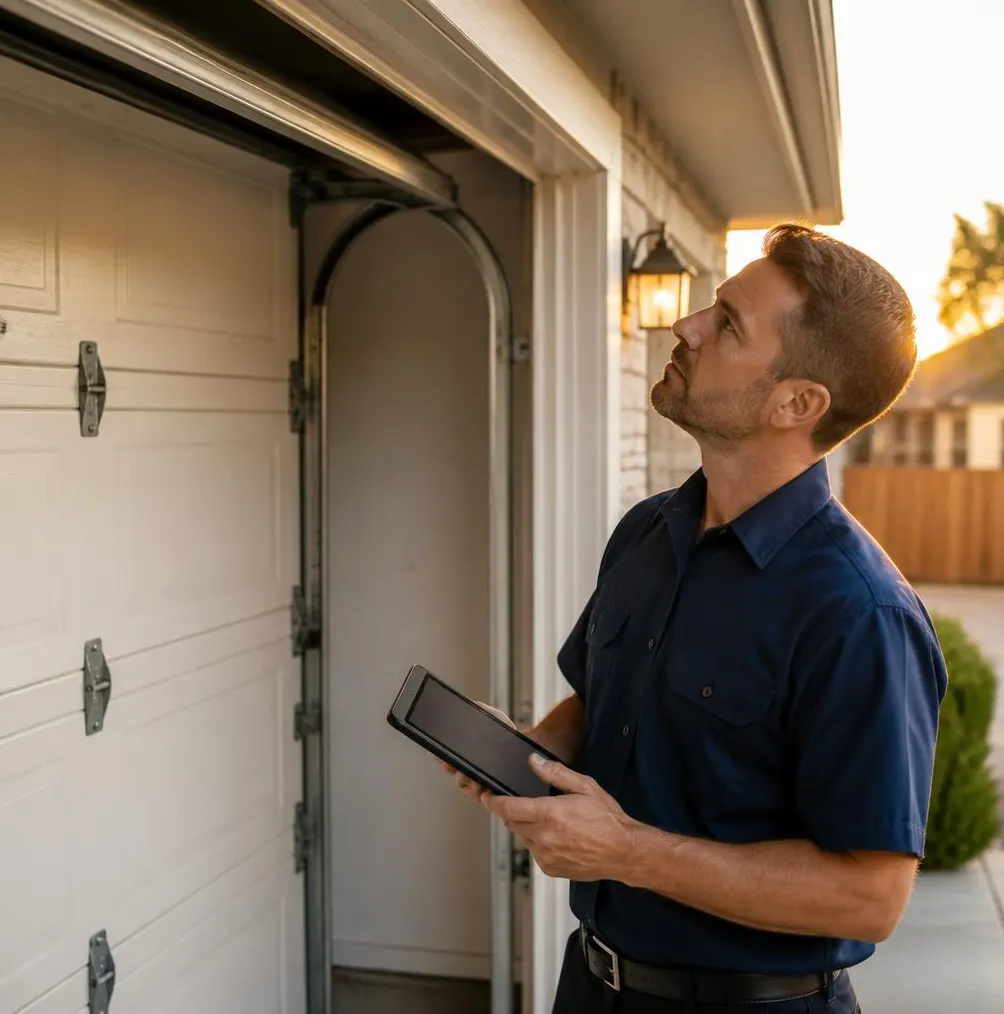
The Call That Starts With "Tell Her/Him I'm Right"
This comes up more than you'd think. A technician shows up for an opener repair or a new installation, and one spouse is standing there saying the battery backup is required and worth every penny, while the other is convinced it's an upsell. Usually it started during a power outage: the rain knocked out a line, or PG&E cut power during a dry, windy stretch, and the garage door wouldn't budge. One person wants to fix that problem for good. The other doesn't see why a garage door needs its own battery.
Here's the plain-language version, so you can settle it without the technician having to referee.
What a Battery Backup Actually Is
It's a battery pack, usually built into or mounted next to the garage door opener's motor unit. When the power goes out, the backup switches on automatically and runs the opener using stored battery power instead of your home's electrical circuit. You still use your remote, keypad, or wall button like normal. The door doesn't know the difference — it just keeps working.
Most backups are good for a set number of open-and-close cycles before the battery needs to recharge, not unlimited use. Think a handful of cycles, not a week of operation. It's designed to get you and your car in and out during an outage, not to run your garage like nothing happened.
How It Works Day to Day
- The battery sits charged and idle as long as you have normal power.
- When the power cuts, the opener senses it and switches over, usually within a second or two.
- You get a visual or audible signal on the opener unit (a blinking light, a beep) letting you know you're running on battery.
- Once power returns, the battery starts recharging and goes back to standby.
Accessories wired through the opener — some lights, some Wi-Fi modules — may or may not run on battery power depending on the model. The motor and the safety sensors are the priority.
When It's Required
If you're installing a new garage door opener today, there's a good chance it comes with a battery backup built in, not as an optional add-on. Opener manufacturers have moved this direction largely because of California's push for battery backup on new installations, tied to concerns about people being able to get their car out during a power outage or earthquake when the garage is the main way in or out. If you're replacing an opener now, don't be surprised if backup capability is just part of the unit — it's becoming standard rather than extra.
If you have an older opener without one, you're not out of compliance with anything by keeping it. The requirement applies to new installations, not a mandate to retrofit what's already on your ceiling.
Why It Actually Matters Here
This isn't just a nice-to-have in this part of California. Winter rain can knock out power for hours. During dry, windy stretches in fire season, planned shutoffs happen with little notice. If your garage is the only way to get your car out, or if you've got an older home where the side door sticks or doesn't exist, a dead opener during an outage isn't a minor inconvenience — it's you stuck in the house or stuck outside it.
The Trade-Offs, Honestly
- Cost: Built-in backup adds to the price of a new opener, typically in the range of extra tens of dollars up to a bit more depending on the model — not a huge jump, but it's there.
- Battery life: These batteries typically last a few years before needing replacement, similar to a smoke detector battery but bigger.
- Limited cycles: It's for getting through an outage, not running indefinitely. Don't plan on using the garage door twenty times during a multi-day shutoff.
So who's right in the argument? If outages happen in your area with any regularity, or your garage is your main entry point, the backup earns its keep. If you've got a side door you actually use and outages are rare at your place, it's a smaller win — still nice, just not make-or-break.
When to Call San Jose Garage Door Specialists
If your current opener doesn't have battery backup and you'd like one, or if your opener is older and due for replacement anyway, that's a straightforward garage door opener repair and installation job. We can also check whether your existing unit is compatible with an add-on battery pack instead of a full replacement, and walk you through what fits your situation and budget. If the opener itself is struggling — slow response, grinding, or not reversing properly — that's worth a look regardless of the battery question.
Give San Jose Garage Door Specialists a call if you want an opener that won't leave you stuck during the next outage. We serve San Jose and the surrounding South Bay, and we'll help you settle the debate for good.