
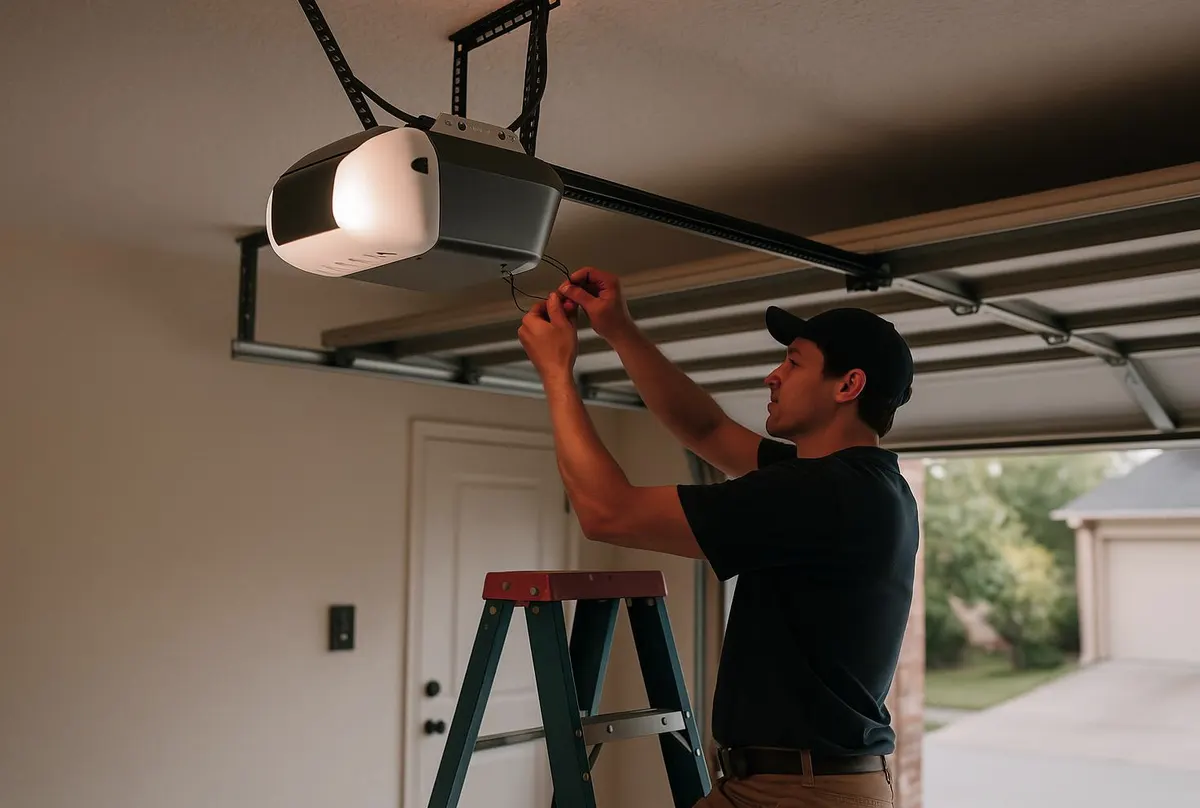
What a technician sees on a typical call like this
The call usually starts the same way: someone noticed a bubble under the paint near the bottom of the door, or the panels won't line up anymore and the door drags when it opens. When a technician gets out there, they're usually looking at one of two things. Either it's surface rust along the bottom panel where water pools after rain, or it's swelling in a wood-composite or hollow steel door where moisture got into a seam and the material expanded. Both look alarming. Only one of them is usually urgent.
Why this happens more here than people expect
San Jose doesn't get year-round rain, but the winter wet season combined with long dry stretches the rest of the year is actually a rough combination for garage doors. Here's the pattern:
- Winter rain drives water against the bottom few inches of the door, especially if the driveway slopes toward the garage or the weatherstripping has gone flat.
- Dry season dust and wildfire smoke settle into any cracks in the paint or finish, and when rain finally comes, that grit holds moisture against the metal or wood longer than clean rain would.
- Condensation inside the garage, especially in uninsulated garages, can collect on the inside of a steel door even when it never rains, quietly rusting it from the inside out.
- Salt air accelerates corrosion on homes closer to the bay, even though San Jose isn't directly coastal — moist, salt-tinged air still travels inland on certain wind patterns.
None of this means your door is poorly made. It means it's been sitting in a spot that gets wet, dries out, gets dusty, and gets wet again — over and over, for years.
Surface rust vs. structural damage: how to tell the difference
This is usually where the disagreement starts. One person thinks it's just ugly and can be touched up. The other thinks the whole door needs to be replaced. The truth is usually in between, and you can check it yourself:
- Surface rust looks like orange-brown spotting or flaking paint, usually confined to the bottom panel or around hardware. If you press on it with a fingernail and the metal underneath feels solid, it's cosmetic. It still needs attention, but there's no rush.
- Bubbling or blistering paint on a steel door often means rust is forming underneath the surface, even if you can't see it yet. This is worth sanding back and checking before it spreads.
- Swelling or warping on a wood or wood-composite door means moisture has actually soaked into the material. Press on the swollen area — if it feels soft, spongy, or the panel has visibly bowed, that's structural, not cosmetic.
- A door that no longer closes flush, binds in the track, or has panels that don't align has moved out of shape. That's not something paint fixes.
If you're trying to settle an argument at home: cosmetic rust is a weekend project. Swelling that's changed the shape of the door, or rust that's eaten through metal, is a repair-or-replace conversation.
What actually helps, in order of effort
- Clear the drainage path. If water pools at the base of the garage door after rain, check that the driveway slopes away from the garage and that gutters aren't dumping water right at the door. This is often the real root cause, not the door itself.
- Replace worn weatherstripping. The rubber seal along the bottom of the door hardens and cracks with age and sun exposure. Once it stops sealing, water gets a direct path to the bottom panel every time it rains.
- Sand, prime, and repaint surface rust before it spreads. Steel doors with factory finishes can usually be touched up with a wire brush, rust-inhibiting primer, and exterior paint matched to the original coat.
- Improve airflow in the garage if condensation is the issue — a small vent or dehumidifier can keep moisture from collecting on the inside of a steel door overnight.
- Replace swollen or rotted sections rather than the whole door, if the frame and hardware are otherwise sound. Many panel doors allow single-section replacement.
What doesn't help: painting over active rust without treating it first, or ignoring a door that's started to bind in the track. Both of those get more expensive the longer they sit, especially once a spring or opener has to work harder to compensate for a door that's no longer moving smoothly.
When to call San Jose Garage Door Specialists
If the rust has gone past surface level, if a panel is visibly swollen or warped, or if the door is dragging, sticking, or no longer closing flush, it's worth having it looked at before the next round of winter rain makes it worse. We handle garage door repair for exactly this kind of moisture and rust damage, including panel replacement, weatherstripping, and track adjustments. If the door is old enough that repair would just be a temporary fix, we'll walk you through garage door installation options built for this climate — better-sealed bottom panels, rust-resistant finishes, and hardware that holds up to repeated wet-dry cycles.
If you're in San Jose, Campbell, Los Gatos, Saratoga, Cupertino, Santa Clara, Milpitas, or Morgan Hill and you've got a door that's starting to show its age before the rain picks up, give San Jose Garage Door Specialists a call. We'll tell you straight whether it's a touch-up or a real fix — no guessing games at home required.